
The “Urgent Repair Protocol”: Why Sarasota’s Smartest Homeowners Are Ditching “On-Demand” Service in Q1 2026
By the CMI Strategies Intelligence Team | January 20, 2026 | 9 Minute Read
For decades, home ownership in Sarasota followed a predictable rhythm. The AC stopped cooling in August? You called a number, and someone showed up. A pipe burst in January? You dialed an emergency line, and a van arrived.
In 2026, that rhythm has fractured.
If you live in Bird Key, Lakewood Ranch, or Longboat Key, you may have already noticed the shift. You call for service, and you are placed in a queue. You are told the wait time is 72 hours for a “non-emergency,” or that “emergency rates” now start at a premium that would make a surgeon blush.
This isn’t just about inflation. It’s about Access. The top-tier Urgent Service providers in Sarasota—the ones with the Google Verified badges, the background-checked technicians, and the proper insurance—are moving away from the “On-Demand” model entirely. They are adopting the Urgent Repair Protocol.
If you want to protect your asset and your sanity in 2026, you need to understand why this shift is happening and how to get on the right side of it.
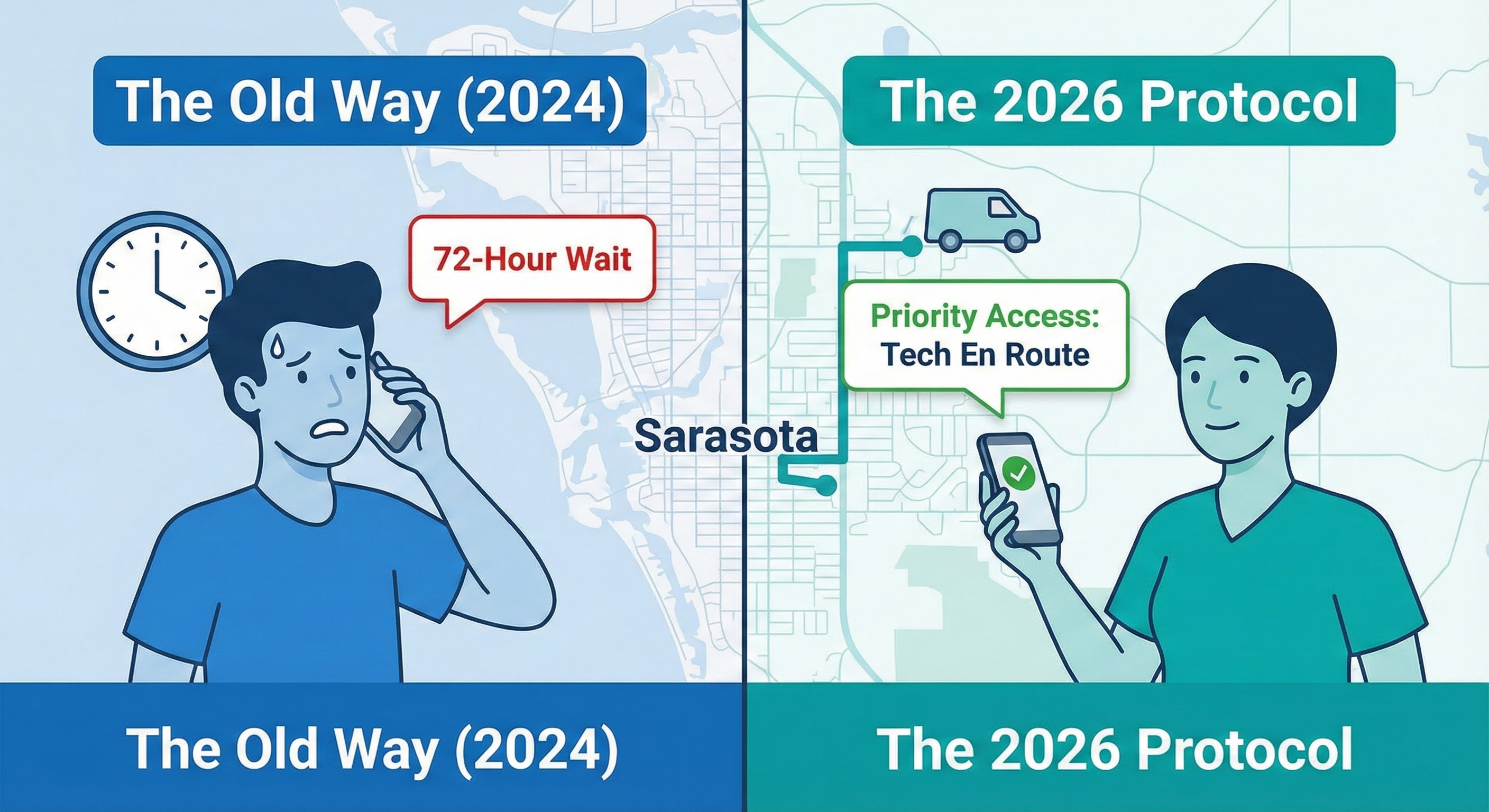 The “Access Gap” is the defining inequality of the 2026 Sarasota service market.
1. The “Silent Season” Fallacy: Why Q1 is Dangerous
There is a dangerous misconception among new Sarasota residents that Q1 (January through March) is the “safe” season. The hurricanes are gone, the heat is manageable, and the humidity seems lower.
Data from our 2026 Q1 Market Intelligence Report reveals the opposite. Q1 is actually the “Silent Danger” season.
- The Cold Snap Shock: In January and February, temperatures in Sarasota dip into the 50s. Residents turn on heating strips that have gathered dust for nine months. This triggers a wave of “burning dust” calls and electrical failures in older heat pumps.
- The Humidity Creep: By March, humidity climbs back to 74% on average. Homes that were “opened up” to enjoy the fresh air in February often trap this moisture in drywall and carpets. Without active conditioning, this leads to rapid mold blooms that aren’t detected until the smell becomes undeniable.
The “Urgent Repair Protocol” is designed to catch these invisible threats. It shifts the focus from “fixing the break” to “monitoring the envelope.”
2. The Insurance Pivot: Claims vs. Retail Reality
Perhaps the biggest driver of the “Urgent Repair Protocol” is the massive legislative reform we’ve seen in Florida’s insurance market.
For years, many homeowners treated their insurance policy as a maintenance plan. A storm hit, a claim was filed, and a new roof or AC unit was approved. Those days are over.
In 2026, insurance carriers are demanding proof of maintenance.
If a pipe bursts and causes water damage, the adjuster will ask for your maintenance logs. If your AC fails and causes mold, they want to see your service history. If you cannot provide a documented “Protocol” of care, your claim may be denied as “negligence” rather than “accident.”
The “Urgent Repair Protocol” provides this digital paper trail automatically. It is your defense against claim denial.
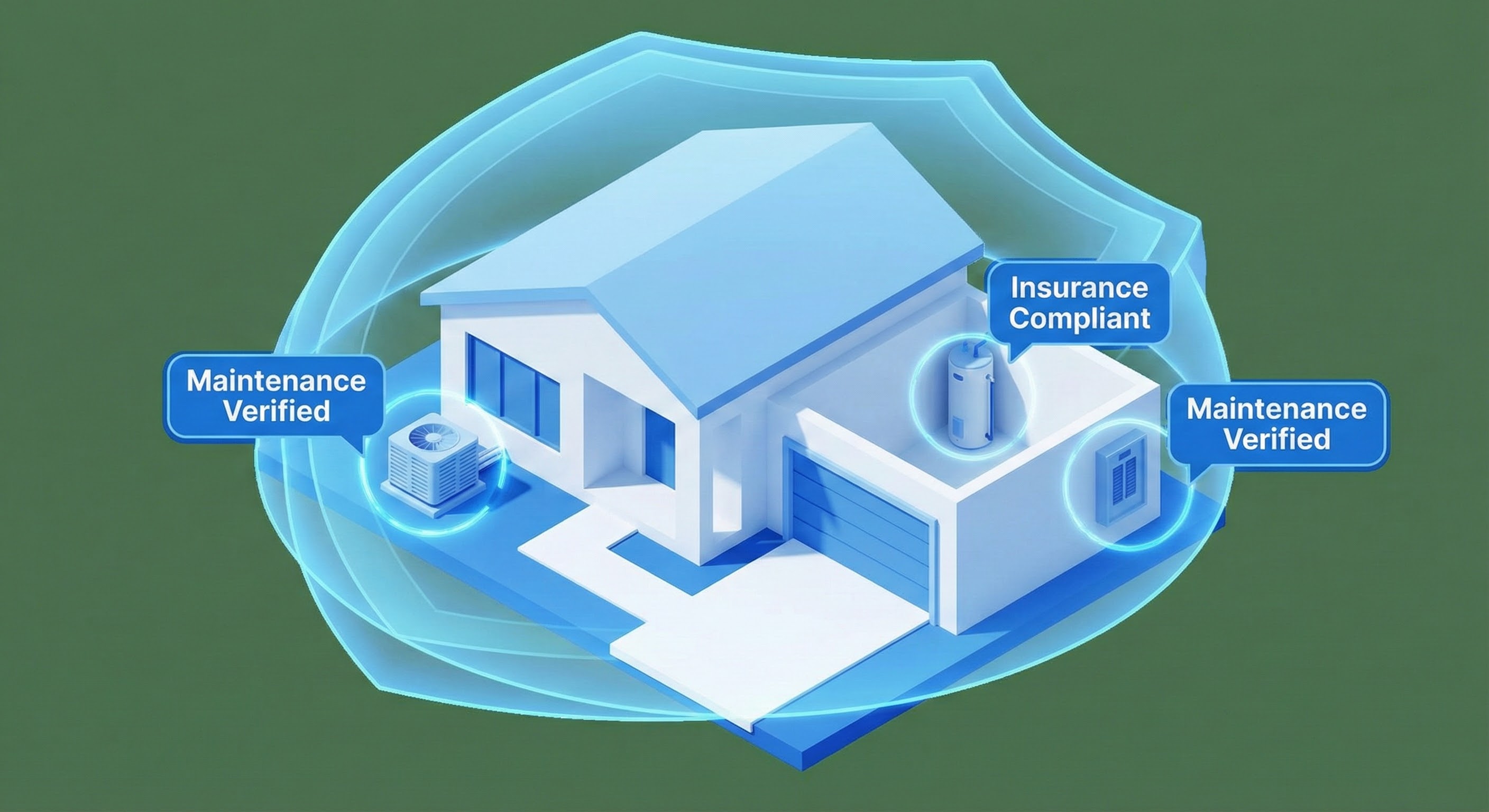 In 2026, your maintenance log is as valuable as your insurance policy.
3. The “Smart Water” Revolution
A core component of the Urgent Repair Protocol is the integration of “Smart Water” technology. This is especially critical for Sarasota’s snowbird population and frequent travelers.
Water damage is the #1 destroyer of wealth in Florida real estate—far outpacing fire or theft. The Protocol mandates the installation of AI-driven flow monitors (like Moen Flo or Phyn) on the main water line.
The Protocol in Action:
- Scenario: You are in New York for the summer. A flex line on your 2nd-floor toilet bursts at 2:00 AM.
- Without Protocol: Water runs for three weeks. Your home is gutted. Mold is everywhere. Restoration takes 6 months.
- With Protocol: The AI detects the abnormal flow pattern within 3 minutes. It automatically shuts off the main water valve. It sends an alert to your phone and your designated Plumbing Partner. You lose 3 gallons of water, not 30,000.
4. Why “Google Verified” Contractors Demand Protocols
You might be wondering: “Why can’t I just pay extra when I have an emergency?”
Because the best technicians are fully booked. The consolidation of the “Google Verified” badge has raised the bar for contractors. To maintain their verification, they must adhere to strict capacity limits. They simply cannot take every call.
Service companies are prioritizing clients who are on a Protocol Agreement. These clients get:
- Priority Dispatch: You skip the 3-day queue.
- Waived Emergency Fees: You don’t pay the “panic premium.”
- The “Trust Loop”: You know the technician who is coming because you’ve seen their video bio (a standard part of the Protocol service).
5. The Commercial Grade Shift
Finally, we are seeing a “trickle-down” of commercial standards into residential Sarasota. With massive projects like the $500M+ Sarasota Square Mall redevelopment raising the bar for local trades, the best contractors are adopting commercial-grade discipline.
The “Urgent Repair Protocol” is essentially a commercial facility management strategy applied to your luxury home. It treats your HVAC, plumbing, and electrical systems not as appliances, but as Capital Assets that require lifecycle management.
Conclusion: The Cost of Inaction
In the new Sarasota economy, the cost of inaction is no longer just a repair bill. It is the risk of a denied insurance claim, the stress of a multi-day wait for service, and the devaluation of your home due to unmanaged humidity.
The “Urgent Repair Protocol” is not an upsell. It is the new baseline for responsible home ownership in Florida. Make sure you are on the list.
 Peace of mind in 2026 is digital, documented, and proactive.